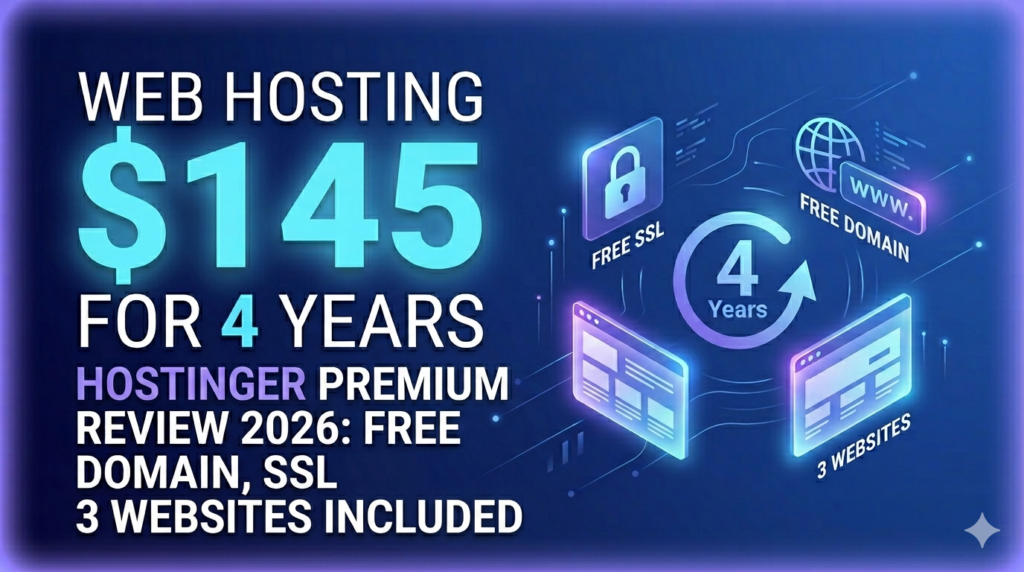
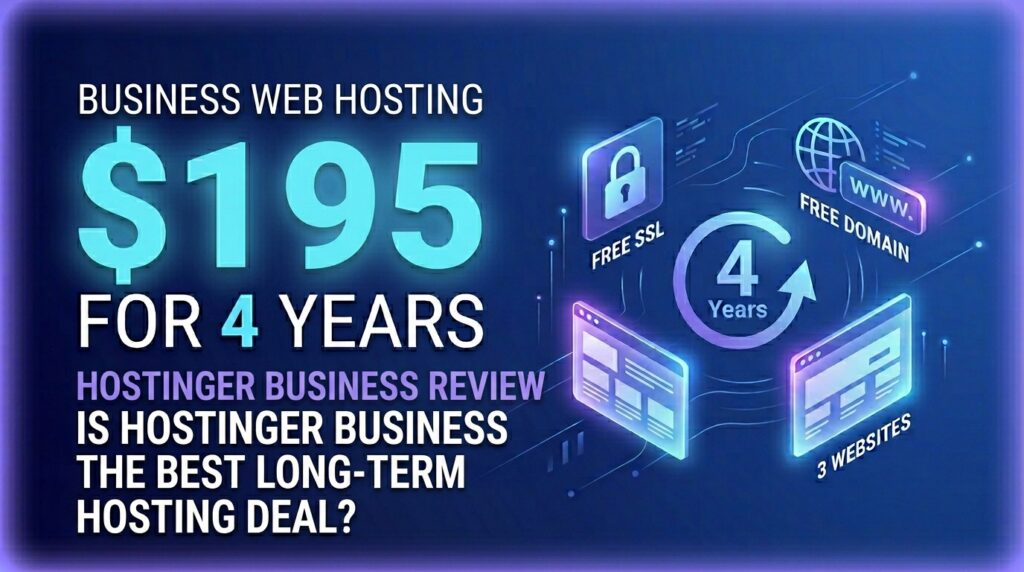
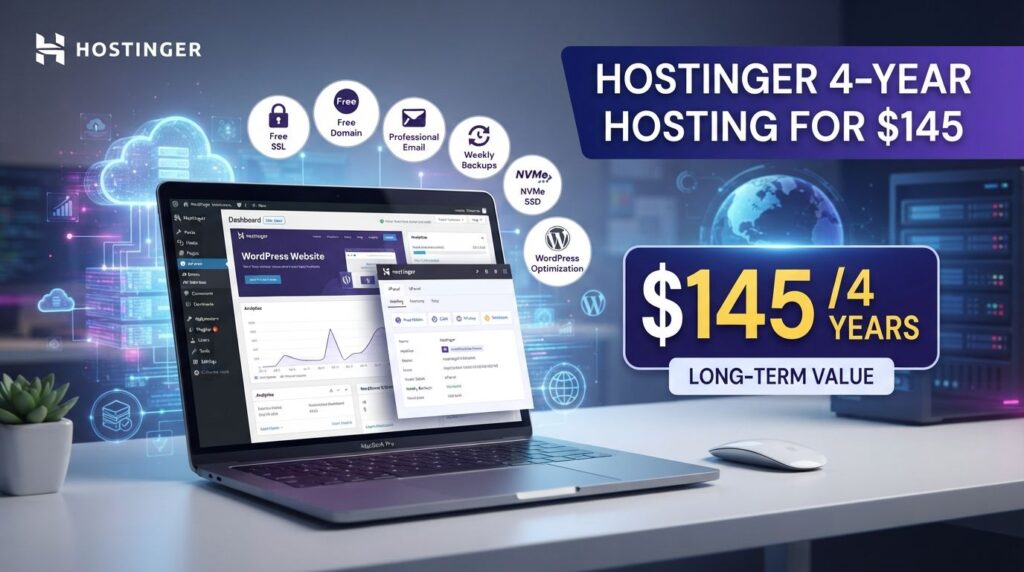
$145 for 4 Years of Website Hosting: A Practical Guide for Startups
If you are comparing website hosting for a new business website, the idea of paying once and staying covered for four years can be appealing. The real question is not just the headline price, but whether the plan gives a startup enough room to launch, grow, and avoid disruptive migrations later.
This guide breaks down what the Hostinger $145 deal can mean for startup hosting, what to check before buying, and when a longer hosting term makes practical sense.
Best for: founders who want predictable website hosting costs, a simple setup, and enough flexibility to support an early-stage launch. Long-term plans can be useful when you already know your project will stay online for years and you want to reduce renewal surprises.
Main takeaway: a low upfront offer can be valuable, but startups should judge it by uptime expectations, support quality, storage, email needs, and how easy it is to scale if traffic grows faster than expected.
Why website hosting matters so much for startups
For a startup, hosting is more than a technical purchase. It affects how quickly your site loads, how reliably customers can reach you, and how much time your team spends dealing with maintenance. Good web hosting for startups should support a clean launch, keep operational friction low, and leave room for future growth.
That is why many founders look at startup hosting as a long-term business decision rather than a short-term expense. If the goal is to launch a brand site, portfolio, landing page, or early ecommerce store, a plan like Hostinger startup hosting can be attractive when the price and features align with the business stage.
Practical rule: choose hosting for the website you expect to run, not only the website you are building today. A small launch can still benefit from a plan that supports future pages, blog content, email, and traffic spikes.
Core factors that matter most
- Renewal structure: long introductory pricing is helpful only if the renewal still fits your budget.
- Resource fit: storage, bandwidth, and site limits should match your current stack.
- Support access: startups often need quick help when a launch issue appears.
- Ease of use: a simple dashboard saves time for non-technical teams.
- Scalability: the plan should make upgrades straightforward if your new business website starts to grow.
When a 4 year hosting term can make sense
A longer commitment can be practical if you are building a stable brand site, a service business site, or a startup landing page that is unlikely to move soon. It can also help teams keep budgeting simple while they focus on product, sales, and content.
However, long-term plans are best when you are confident in the provider, the feature set, and the probability that your site will remain on the same platform for a while.
How the Hostinger $145 deal fits a startup workflow
Think of the hosting decision as a sequence. First, you launch the site. Next, you publish core pages and connect your domain. After that, you monitor speed, uptime, and support responsiveness. If the platform remains easy to manage, it becomes a useful part of your operating system instead of a recurring headache.
Launch
Set up the new business website, connect the domain, and publish the minimum pages needed to start generating leads or sales.
Stabilize
Check site speed, install only the essentials, and make sure support is easy to reach if something breaks during launch week.
Recommended reading: Is Hostinger’s $145 for 4 Years Deal Good for Startups in 2026?
Grow
Expand content, add landing pages, and review whether your current website hosting still matches traffic and operational needs.
If your startup is building with WordPress, agencies like Web Designing Experts often recommend choosing hosting that keeps setup simple while still leaving room to scale.
Why this kind of offer is appealing
- Predictable upfront budgeting for a longer term.
- Useful for founders who want to avoid frequent renewals.
- Good fit for straightforward startup websites.
- Can simplify early-stage planning when cash flow is tight.
Tradeoffs to keep in mind
- Long commitments reduce flexibility if your needs change.
- Not every startup needs multi-year hosting from day one.
- Features matter more than the headline price alone.
- You should still review renewal terms carefully.
Who should consider it first
Founders launching a brochure site, service page, portfolio, or early content site may benefit most. If your plan is to stay on one provider and keep the site lean, long-term startup hosting can be efficient.
Comparison: which hosting path fits a startup best?
The right choice depends on how much control, flexibility, and growth headroom you need. A Hostinger hosting plan may be a good middle ground for startups that want simplicity without jumping straight into a more complex setup.
Shared hosting
Best for: early-stage sites with modest traffic.
Main strength: lower cost and easy setup.
Main tradeoff: fewer resources and less headroom for growth.
Recommended startup hosting
Best for: founders who want balance.
Main strength: a practical mix of simplicity, support, and room to expand.
Main tradeoff: you still need to review plan limits and renewal terms.
Advanced VPS or premium cloud
Best for: teams with heavier traffic or technical control needs.
Main strength: more flexibility and performance potential.
Main tradeoff: higher complexity and usually more management overhead.
Recommended reading: Is Hostinger’s $145 for 4 Years Deal Good for Small Businesses in 2026?
What startups should watch after launch
- Page speed: keep plugins, images, and scripts lean.
- Support response: especially important during launch and campaign periods.
- Backups and recovery: essential for a new business website.
- Upgrade path: make sure moving up is simple if traffic increases.
What the deal does not replace
A good price does not eliminate the need for smart site management. You still need a clean theme, a sensible plugin stack, secure logins, and a plan for content updates. Hosting is the foundation, but the website still needs ongoing care.
If your startup expects rapid growth, choose a provider and plan that let you upgrade without rebuilding everything from scratch.
Is $145 for 4 years of website hosting a good deal for startups?
It can be, if the plan fits your actual needs and the renewal terms remain reasonable. The best value comes from matching the hosting to your launch goals, not just the upfront price.
Is Hostinger startup hosting suitable for a new business website?
Yes, it can be suitable for many new business websites, especially if you want a simple setup and predictable costs. Review the plan details to make sure it supports your expected traffic and features.
Should I choose a 4 year hosting plan or pay annually?
Choose the longer term if you are confident in the provider and want to reduce renewal management. If your startup is still experimenting, shorter terms can offer more flexibility.
What should I compare before buying website hosting?
Look at storage, support, performance, backups, renewal pricing, and upgrade options. Those factors usually matter more than the headline offer alone.
Can I switch later if my startup outgrows the plan?
Usually yes, but migrations take time and planning. That is why it helps to choose startup hosting with a clear upgrade path from the beginning.
Where can I review current Hostinger options?
You can review the hosting plan and compare what is included before making a decision.
Final verdict: is this startup hosting option worth it?
The $145 for 4 years of website hosting idea makes sense for startups that want a stable, low-maintenance foundation and prefer to plan costs ahead of time. It is especially relevant for founders building a simple brand site, landing page, or early content-driven project.
The main limitation is flexibility. If your startup may pivot quickly, add heavier features, or outgrow the plan soon, a shorter commitment or a more scalable setup may be smarter. For many early-stage teams, though, the appeal is clear: lower administrative friction, a straightforward launch, and a hosting decision that supports focus on the business itself.
If you want to keep things practical and move quickly, check the current Hostinger hosting options and compare them against your startup roadmap before you commit.
Choose website hosting that supports your startup from day one
Review the plan details, compare the long-term value, and decide whether a four-year hosting commitment fits your new business website. If the goal is a reliable, simple starting point, this is a practical place to begin.