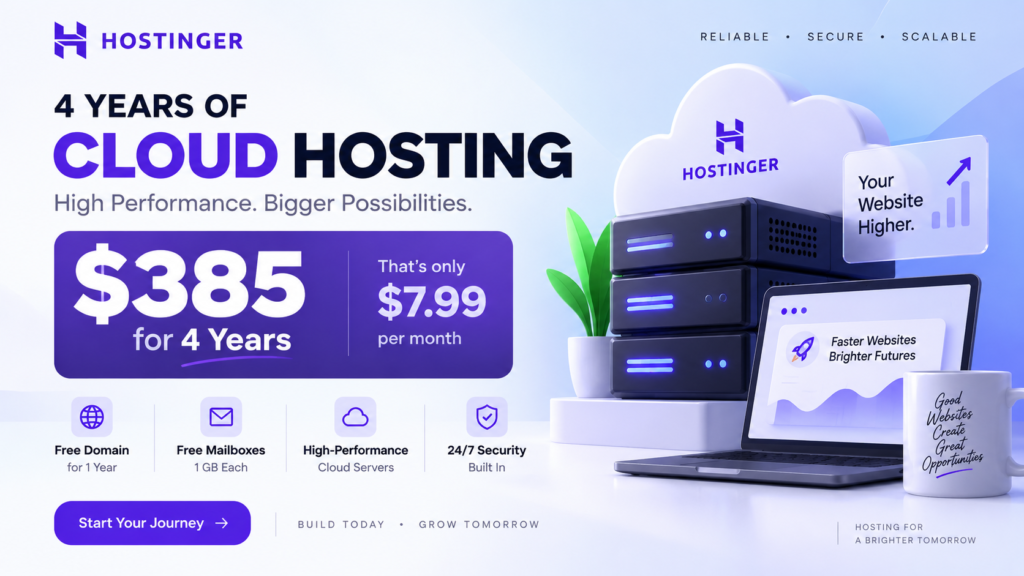
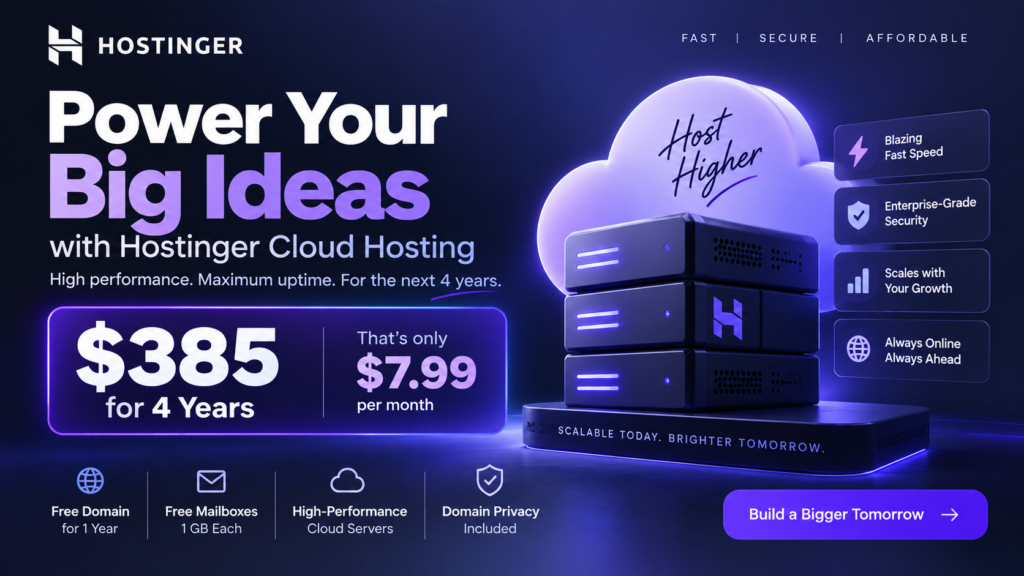
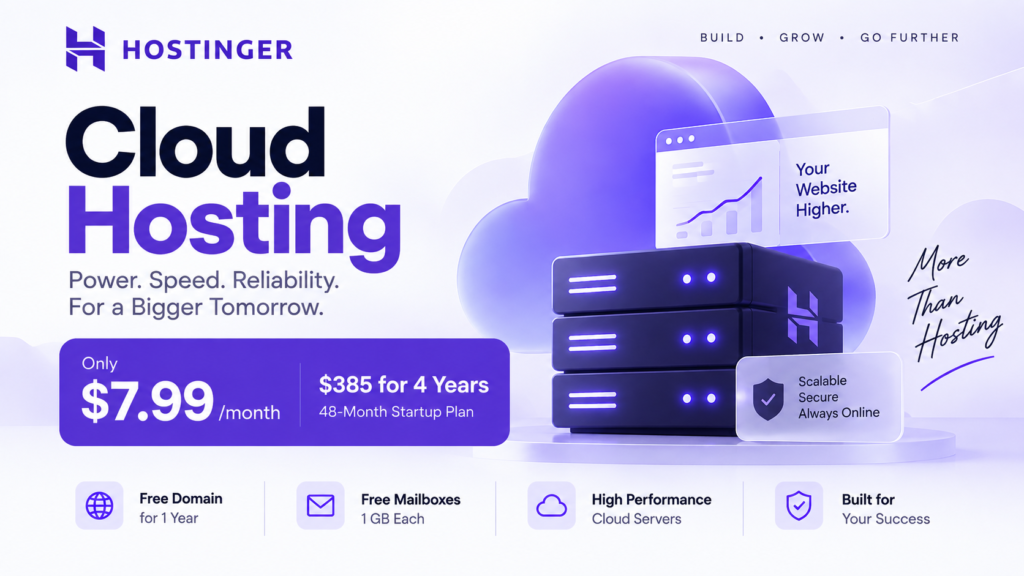
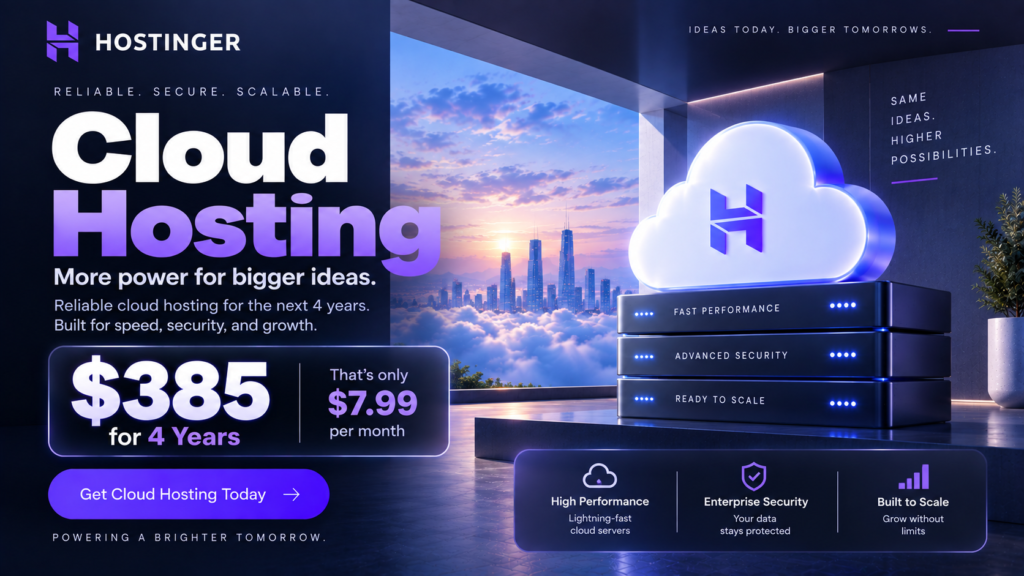
4 Years for About $385: A Hostinger Cloud Hosting Guide for users evaluating scalability value
When people compare cloud hosting, the real question is not just monthly price. It is whether the platform can support growth without forcing an early migration. That is where hostinger cloud hosting scalability value becomes useful: it helps you judge whether a long-term commitment makes sense for a site that expects traffic, content, or business demands to increase over time.
This guide breaks down the long-term cost angle, the practical tradeoffs of a 4-year commitment, and the kinds of users who may find a plan like the hostinger cloud hosting 4 year plan worth considering.
What this long-term cloud hosting value really means
If you are evaluating the hostinger cloud hosting $385 angle, the most important thing is to separate headline cost from total usefulness. A long billing cycle can look attractive because it lowers the effective monthly outlay, but the real value depends on whether the plan offers enough room to grow, enough performance consistency, and enough flexibility for your project timeline.
In other words, the best deal is not always the cheapest monthly rate. It is the plan that lets you stay on the same platform while your site becomes more demanding.
Key takeaway
- Best fit: sites that expect gradual growth and want predictable costs.
- Main benefit: paying ahead can improve budget planning over a longer horizon.
- Main caution: long commitments reduce flexibility if your needs change quickly.
- Watch for: resource limits, renewal terms, and whether the plan matches your workload.
Why scalability value matters more than a low entry price
Cloud hosting is usually bought for one reason: growth. A blog, portfolio, agency site, or small store may start simple, but the hosting decision should account for future traffic spikes, more pages, heavier plugins, and higher expectations for speed and reliability. That is why hostinger cloud hosting scalability value is a better lens than price alone.
For many users, the attraction of a longer term is straightforward. You can lock in a known budget and avoid revisiting hosting decisions every few months. If the plan is stable enough for your workload, the long-term structure can be convenient. If not, the savings can disappear the moment you outgrow the setup.
That growth path is the core of the conversation. A plan such as the Hostinger cloud startup plan may be appealing when you want a cleaner path from launch to expansion without rebuilding your hosting stack too soon.
What to look at before choosing a 48-month cloud plan
Resource headroom
Check whether the plan can handle more pages, more visitors, and more background processes as your site grows.
Operational simplicity
A long-term plan helps only if the control panel, backups, and site management remain easy to use.
Upgrade path
The best value comes from a platform that lets you move up without unnecessary downtime or complexity.
If you are considering the hostinger 48 month cloud hosting structure, think about your project timeline. A business website, niche content brand, or early-stage store may benefit from a longer horizon if the site plan is already clear. A short-term experiment, on the other hand, may not justify that level of commitment.
How the value compares in practical terms
Below is a simple way to think about the tradeoff between lower commitment and stronger long-term planning. It is not a universal ranking; it is a decision framework.
Shared hosting
Best for: very small sites, testing ideas, or low-traffic projects.
Recommended reading: $7.99/Month for 4 Years: A Hostinger Cloud Hosting Guide for users evaluating included email value

Main strength: low entry cost and simple setup.
Tradeoff: less room for growth and fewer performance advantages.
Cloud hosting with a long term
Best for: sites that want room to scale while keeping budgets predictable.
Main strength: better balance between cost planning and growth potential.
Tradeoff: you commit longer, so flexibility is lower.
Higher-end VPS or premium cloud
Best for: heavier workloads, more technical teams, or demanding applications.
Main strength: more control and stronger resource ceilings.
Tradeoff: usually more complexity and a higher cost profile.
For users focused on value, the question is whether a plan like Hostinger Cloud Hosting gives enough capacity for the next few years without pushing you into a more expensive tier too early.
Pros
- Long-term budgeting can be simpler.
- Useful for projects that expect steady growth.
- Cloud architecture is generally a better fit for scaling than basic shared hosting.
- Can reduce the need to re-evaluate hosting every few months.
Cons
- A long commitment is less flexible if your needs change.
- Value depends on whether the resource limits match your workload.
- Upfront planning matters more when you pay for several years at once.
- Not every site needs a multi-year cloud plan.
Who is the hostinger cloud hosting 4 year plan best for?
The hostinger cloud hosting 4 year plan is most compelling when you already know your site is not a short-lived experiment. It suits users who want to build once, improve over time, and avoid frequent hosting migrations.
Content publishers
Good for blogs and niche sites that expect traffic and content volume to build gradually.
Small businesses
Useful for service sites that need stable performance, a professional presence, and predictable costs.
Recommended reading: Can $7.99/Month Work for 4 Years? Hostinger Cloud Hosting for businesses planning hosting costs for four years
Freelancers and agencies
Helpful when you manage client sites and want a dependable platform with room to grow.
If your priority is a lower entry point with room to expand later, the Hostinger cloud hosting $7.99 per month framing may be a useful way to compare the long-term plan against shorter billing options, as long as you verify the current offer details on the plan page.
Common questions about long-term cloud hosting value
Is a 4-year hosting plan always the cheapest option?
Not always. It can lower the effective monthly cost, but only if the plan suits your site for the full term.
Does cloud hosting automatically mean better scalability?
Cloud hosting usually gives you a stronger scaling foundation than basic shared hosting, but the exact limits still depend on the plan.
When does a long-term plan make sense?
It makes sense when you expect steady use, want a predictable budget, and do not want to switch platforms often.
What is the biggest risk of paying ahead?
The biggest risk is reduced flexibility if your project changes, grows faster than expected, or no longer needs the same setup.
Should beginners choose cloud hosting?
Beginners can choose cloud hosting if they want growth room, but a simpler plan may be enough for very small websites.
Where should I verify current pricing?
Always confirm the latest offer and plan details on the official hosting page before you commit.
If you want to compare current options directly, you can also review the hosting plan and check whether the term length, resources, and upgrade path match your site strategy.
Final verdict on hostinger cloud hosting scalability value
The strongest case for hostinger cloud hosting scalability value is for users who want a long runway without paying for enterprise-level complexity. If your site is likely to grow steadily and you prefer predictable budgeting, a long-term cloud plan can be a sensible choice.
The main limitation is flexibility. A multi-year commitment is best when you are confident about your project direction. If you are still testing an idea, or if you expect your traffic and resource needs to change rapidly, a shorter commitment or a more powerful alternative may be the safer move.
Overall, this type of plan is most suitable for creators, small businesses, and agencies that value stability, room to scale, and long-horizon budgeting. If that sounds like your situation, it is worth taking a closer look at the current package details before you decide.
Ready to compare the current cloud hosting options?
If you are evaluating a long-term plan, the best next step is to review the current features, billing terms, and upgrade path on the official hosting page. That will help you decide whether the offer matches your growth goals and budget.