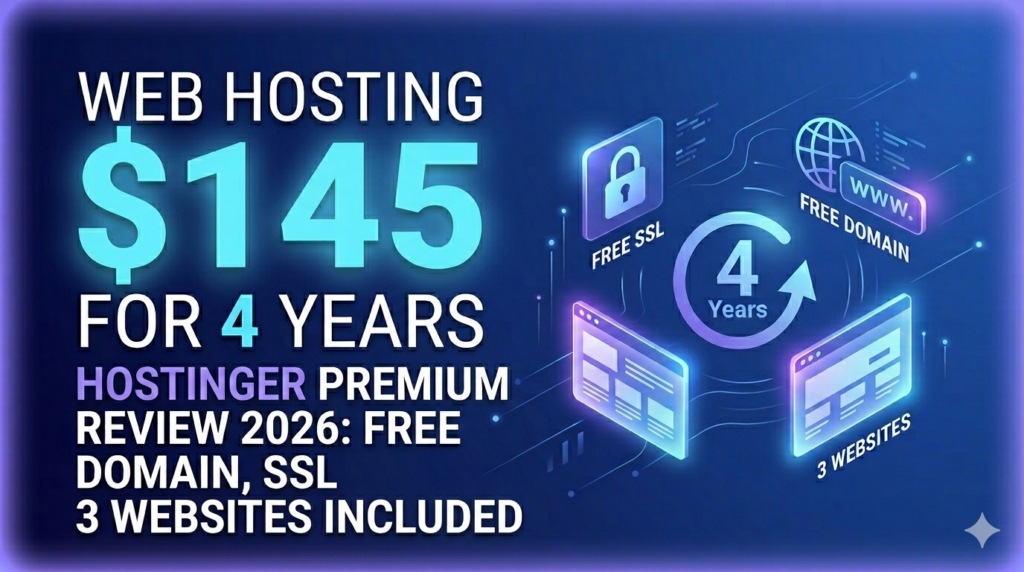
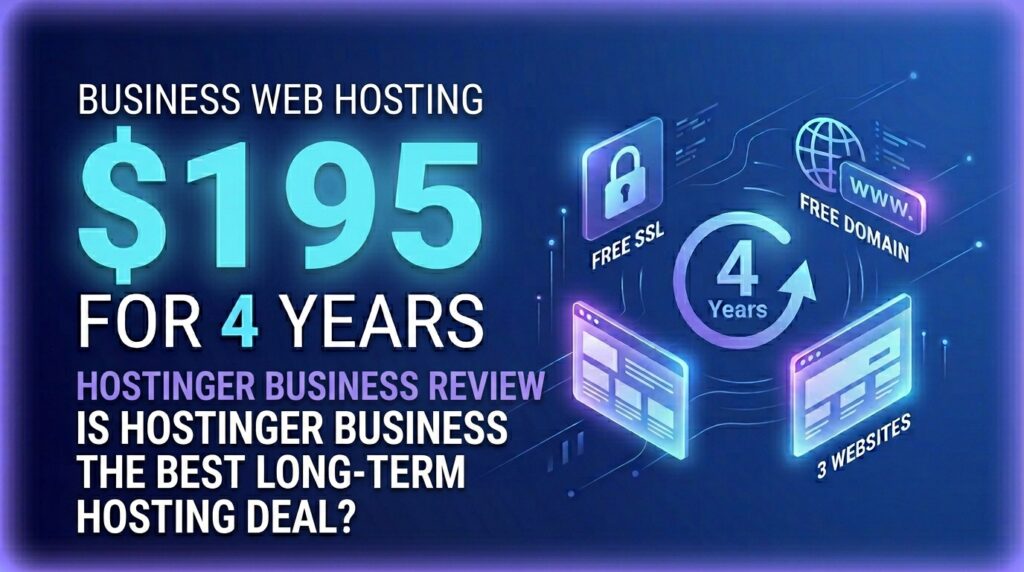
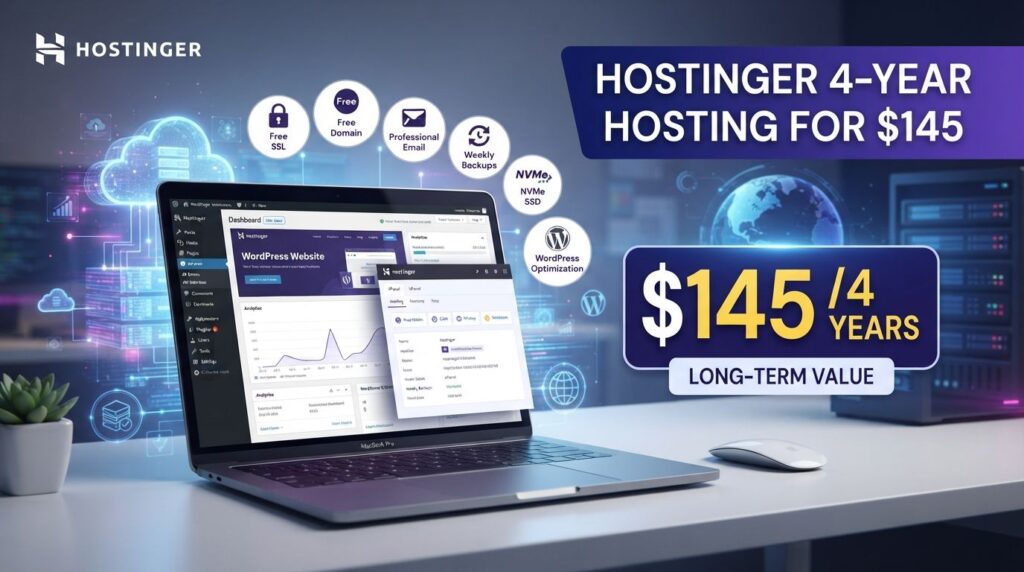
Starting Your First Website? How Far Can $145 of Hostinger Hosting Take You?
If you are building a first site, the real question is not just which plan to choose. It is how to turn a fixed budget into enough time, stability, and room to grow. This guide breaks down what Hostinger for beginners can realistically do when your total budget is $145.
For many new site owners, that budget needs to cover more than hosting alone. You may also need a domain, basic setup tools, and enough flexibility to avoid a rushed migration later. That is why a practical view of website hosting cost matters from day one.
Quick budget view
- Enough for a sensible first hosting setup if you choose carefully.
- Best used for launch, learning, and early traffic testing.
- Works well when you keep design and tools simple at first.
- Room left over is useful for a domain, email, or future upgrades.
Key takeaway
$145 can go a long way if you use it as a launch budget, not an all-in lifetime plan. For a beginner, the smartest move is to start with a reliable entry-level Hostinger setup, keep the site lean, and reserve part of the budget for essentials like a domain, backups, and a future upgrade path.
What $145 can realistically cover
The value of your budget depends on how you divide it. A first website usually needs more than one purchase decision, and the best results come from prioritizing essentials over extras. With Hostinger, the goal is to secure dependable hosting first, then build a site that is easy to maintain.
That approach is especially useful if you are comparing options through Hostinger, because the entry point is often only one part of the bigger cost picture.
Why Hostinger for beginners makes sense
Beginner-friendly workflow
New users usually want clear onboarding, a manageable dashboard, and a quick path from purchase to publishing. That reduces friction and helps you focus on content instead of administration.
Budget-conscious starting point
If your website hosting cost needs to stay controlled, an entry-level plan can be a sensible way to launch without paying for capacity you do not yet use.
Room to scale later
You can begin small and move up when your project needs more resources, which is often better than overspending on day one.
For many small business sites, blogs, and portfolio projects, Hostinger Cloud Hosting can become a natural next step once the site outgrows a basic launch plan.
How to spend the budget wisely
1. Decide the site’s purpose
Blog, business brochure site, portfolio, or small store? The answer changes how much performance and storage you need.
2. Choose the smallest plan that fits
Do not pay for extra capacity before you have a reason. A lean launch keeps your budget available for the parts that matter most.
Recommended reading: How Much Does It Cost to Host a Website for 4 Years With Hostinger?
3. Build with performance in mind
Use a lightweight theme, limit heavy plugins, and keep images optimized. That helps a modest hosting plan feel stronger.
4. Leave headroom for growth
Traffic spikes, new pages, and added features can change your needs quickly. A smart budget has flexibility built in.

That is also where professional implementation matters. Teams like Web Designing Experts often help new owners choose practical layouts, trim unnecessary features, and launch a site that matches the hosting plan instead of fighting it.
Performance and technical considerations
What to expect
- Enough capacity for a focused starter site.
- Better results when pages are lightweight and well organized.
- Good fit for low-to-moderate early traffic.
What to watch
- Heavy themes and too many plugins can slow any beginner plan.
- Large media libraries increase storage and optimization needs.
- Growing traffic may require an upgrade sooner than expected.
A small hosting plan is not a weakness when the website is built with discipline. In many cases, the site design is the real performance factor.
If you want a smoother path from setup to launch, you can review the hosting plan before you commit and match the package to your immediate goals.
Pros and cons of stretching $145 on Hostinger
Why the budget works well
- Lets you launch without overspending.
- Encourages a clean, focused first build.
- Leaves room for a domain or future upgrade.
- Fits a beginner learning the basics of site management.
Where the budget can feel tight
- Not ideal if you expect rapid traffic growth immediately.
- Premium add-ons can reduce flexibility quickly.
- Very feature-heavy sites may outgrow entry-level hosting faster.
- Renewal planning still matters, even after launch.
Plan comparison: which path fits a first website?
Best for simple launches
Main strength: lowest-friction entry point for a new blog, portfolio, or small business page.
Main tradeoff: limited headroom if the site grows quickly.
Best for balanced growth
Main strength: a stronger path when you want more stability and room to expand.
Main tradeoff: usually costs more than the simplest starter option.
Best for demanding projects
Main strength: more control and capacity for advanced needs.
Main tradeoff: usually too much for a first, simple website.
If you are still deciding, a quick look at Best Cloud Hosting options can help you see whether your budget is better spent on a starter plan now or a stronger platform from the beginning.
Who should use this budget approach?
First-time bloggers
Great if you want to publish regularly, learn WordPress, and avoid paying for more infrastructure than you need.
Recommended reading: Who Is Hostinger’s $145 Four-Year Website Hosting Plan Best For?
Small businesses
Useful for service pages, contact forms, and a lightweight online presence that can be expanded later.
Freelancers and creators
Ideal for portfolios, landing pages, and simple lead-generation sites where content quality matters more than complex technology.
Frequently asked questions
Is $145 enough for a first website?
Yes, it can be enough for a sensible launch if you keep the site simple, choose the right plan, and avoid unnecessary extras.
Does Hostinger for beginners make setup easier?
It can, especially if you want a straightforward dashboard and a practical path from purchase to publishing.
What affects website hosting cost the most?
Your plan choice, renewal timing, domain needs, and any add-ons all influence the final cost.
Should I start with the cheapest option?
Only if it fits your site goals. The cheapest plan is not always the best value if you will outgrow it quickly.
When should I upgrade?
Upgrade when traffic, storage use, or site complexity starts to affect speed, reliability, or day-to-day management.
Final verdict
If you are starting your first website, $145 is a workable launch budget when you use it strategically. It is enough to begin with Hostinger, build a clean site, and preserve some flexibility for future needs. That makes it a strong fit for beginners, small business owners, and creators who want to learn without overspending.
The main limitation is simple: a first website budget should not be spent as if it must support every future stage at once. If you expect heavy traffic, advanced features, or fast scaling, you may want to move toward a stronger plan sooner. But for a practical first launch, this is a smart and realistic starting point.
For a balanced first build, review your hosting choice, keep your design focused, and use your budget with intent. If you need a simple next step, see current hosting options and compare what fits your launch plan today.
Ready to launch your first website?
Start with a practical Hostinger setup, keep your website hosting cost under control, and build a site that can grow with you. If you want a cleaner first step, compare plans now and choose the one that matches your budget and goals.