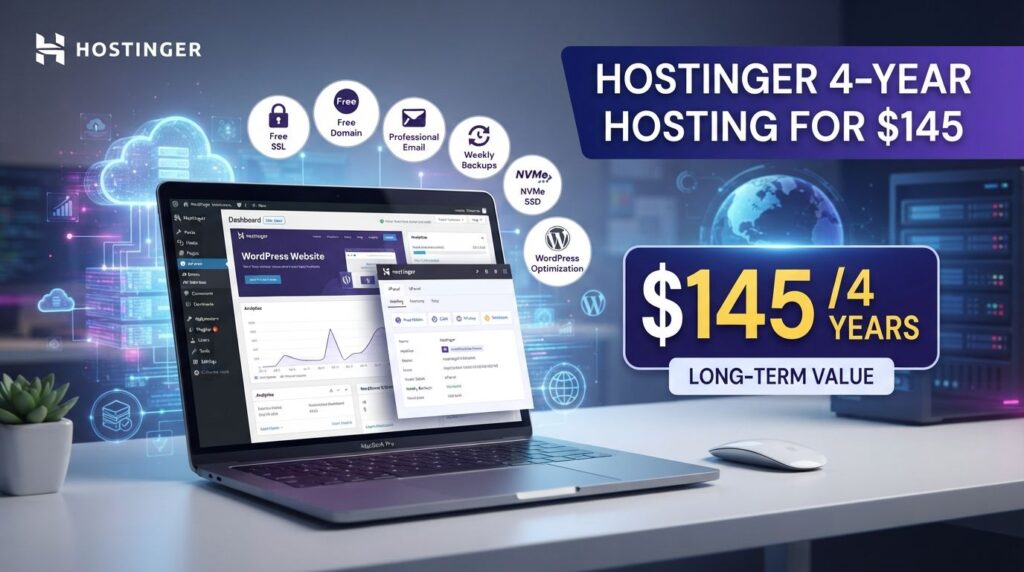
Should Startups Buy Hostinger Hosting for $145 for 4 Years?
If you are choosing hosting for a new business website, the real question is not just price. It is whether a long-term plan gives your startup enough stability, flexibility, and room to grow. This guide breaks down the Hostinger $145 deal in practical terms so you can decide if it fits your startup hosting strategy.
startup hosting
4 year hosting
website hosting
Quick answer: is Hostinger hosting a smart startup move?
Short version: it can be a good fit for startups that want low upfront cost, simple setup, and a long runway for a basic site. The $145 for 4 years offer may appeal if you are committed to keeping the same site live for a while and want predictable website hosting costs.
Best for
Founders launching a new business website, small teams validating an idea, and startups that want simple hosting without a lot of technical overhead.
Watch out for
A 4-year commitment reduces flexibility. If your roadmap may change quickly, a shorter billing cycle can be safer even if the monthly cost is higher.
What the Hostinger $145 deal means for startups
The appeal of Hostinger startup hosting is easy to understand: you pay once for a long period and avoid frequent renewals. For early-stage teams, that can simplify budgeting. It may also work well for founders who want to keep the focus on product, sales, and content instead of constantly revisiting hosting decisions.
Still, the value depends on what you need from hosting. If you only need a straightforward marketing site, a blog, or a lean landing page, long-term hosting can make sense. If your startup expects rapid traffic spikes, complex apps, or frequent platform changes, you may want to compare more scalable options before locking in a long term.
How to judge hosting value before you commit
When people search for hosting for startups, price is only one piece of the decision. A startup needs enough reliability to support a professional image, enough speed to keep visitors engaged, and enough support to avoid wasting time on technical issues. That is why Web Designing Experts often recommend looking at the whole hosting workflow instead of only the checkout price.
Launch
Publish the new business website, connect the domain, and keep the first version simple.
Stabilize
Make sure the site loads consistently, backups are available, and support is easy to reach.
Grow
As traffic and content increase, revisit whether your startup hosting plan still fits your needs.

Benefits of long-term startup hosting
Budget predictability
A multi-year plan can make hosting costs easier to forecast while you are building revenue.
Recommended reading: Is Hostinger’s $145 for 4 Years Deal Good for Small Businesses in 2026?
Fewer renewals
Less administrative friction means more time for product work, content, and customer acquisition.
Simple setup
For a lean site, a mainstream hosting platform can be enough to get online quickly.
If you are comparing website hosting plans, think about the next 12 to 24 months of your startup rather than only the first week.
Limitations to consider before buying the 4 year hosting deal
The biggest tradeoff is flexibility. A startup can pivot. You might change your brand, move from a brochure site to an app, or outgrow the original plan. A long commitment can be fine if your website is stable, but it can feel restrictive if your needs evolve quickly.
There is also the practical question of scale. If your business starts attracting more visitors, running more plugins, or handling more database activity, you may eventually need a stronger configuration. That does not mean the deal is bad; it means the plan should match the stage of the startup.
Who should consider Hostinger hosting for a startup?
Solo founders and small teams
If you need a professional presence quickly, the plan can work well for a lean launch and a straightforward online presence.
Service businesses and agencies
For a lead-generation site, portfolio, or local business page, long-term hosting can be a practical choice.
Fast-moving product startups
If your infrastructure may change soon, shorter billing cycles and more scalable hosting may be safer.
Teams expecting rapid traffic growth
When traffic is likely to rise quickly, the cheapest long-term plan may not be the best long-term fit.
Pros and cons of the Hostinger $145 deal
Pros
- Low upfront cost for a multi-year hosting commitment.
- Good for a simple new business website.
- Helps startups keep hosting costs predictable.
- Useful when the site plan is unlikely to change soon.
Cons
- Less flexibility if your startup pivots.
- May not be ideal for fast scaling or heavier workloads.
- Long commitment can be risky if your needs are still unclear.
- Value depends on whether you actually keep the site for four years.
How it compares with other hosting choices
Lowest friction entry point
Best for: very simple sites and early testing. Main strength: affordability. Tradeoff: less headroom as traffic or complexity grows.
Balanced for many new sites
Best for: startups that want a practical launch setup. Main strength: price-to-value balance. Tradeoff: a long plan works best only if your needs stay stable.
More room to scale
Best for: demanding apps, larger traffic, and technical teams. Main strength: control and capacity. Tradeoff: higher complexity and usually higher cost.
Recommended reading: Is Hostinger’s $145 for 4 Years Deal Good for Startups in 2026?
If you are still comparing options, use the Hostinger checkout page to review the current plan details before you decide.
FAQ about Hostinger hosting for startups
Is Hostinger hosting good for a new business website?
It can be a solid option for a simple new business website, especially if you want easy setup and predictable costs.
Does the $145 for 4 years deal make sense for startups?
It can make sense if your site is stable and you want to reduce renewal hassle. If your startup may pivot soon, a shorter term may be safer.
Is long-term startup hosting always the cheapest choice?
Not always. The lowest upfront price is only valuable if the plan matches your actual needs over time.
What should startups check before buying hosting?
Look at renewal terms, support quality, performance, backup options, and whether the plan can support your expected growth.
Can I start with a basic plan and upgrade later?
In many cases, yes. That is often the right path for startups that want to keep options open while validating demand.
Final verdict: should startups buy Hostinger hosting for $145 for 4 years?
For many startups, the answer is yes, if the website is simple and the business plan is stable. The deal can be a practical way to secure website hosting without creating monthly budget stress. It is especially appealing for founders who want to launch quickly and keep overhead low.
However, if your startup is likely to pivot, scale aggressively, or change technical direction soon, you may want more flexibility than a four-year commitment provides. In that case, shorter billing cycles or more scalable hosting may be the better choice.
In short, the Hostinger $145 deal is best viewed as a value play for stable launches, not a one-size-fits-all solution for every startup.
Recommended reading: if you are shaping your launch stack, compare hosting options with your website goals and growth plan before you commit.
Ready to review Hostinger for your startup?
If your goal is to launch a lean, professional site and keep hosting simple, this is a good time to compare the current plan details and see whether the long-term value fits your startup roadmap.