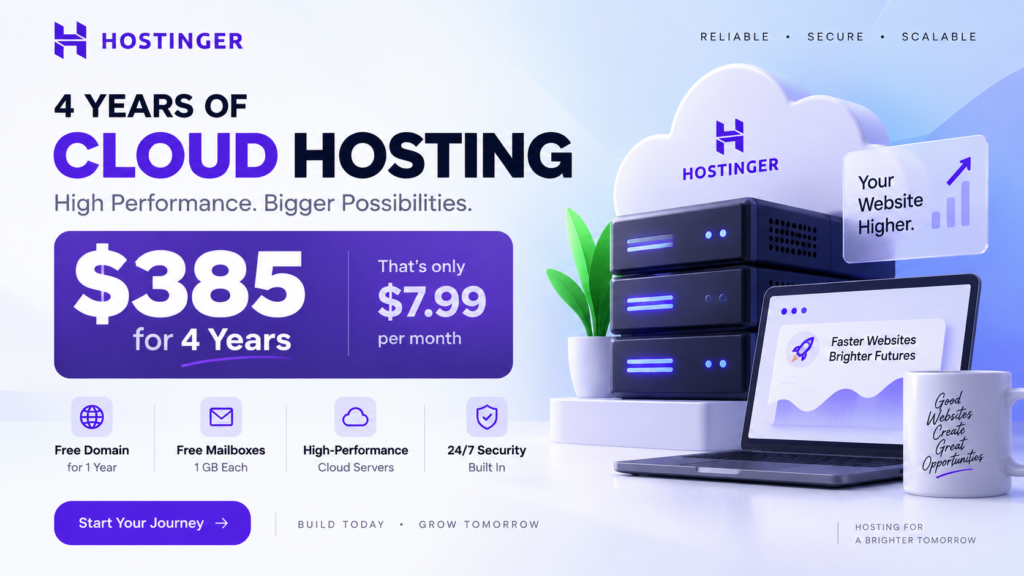
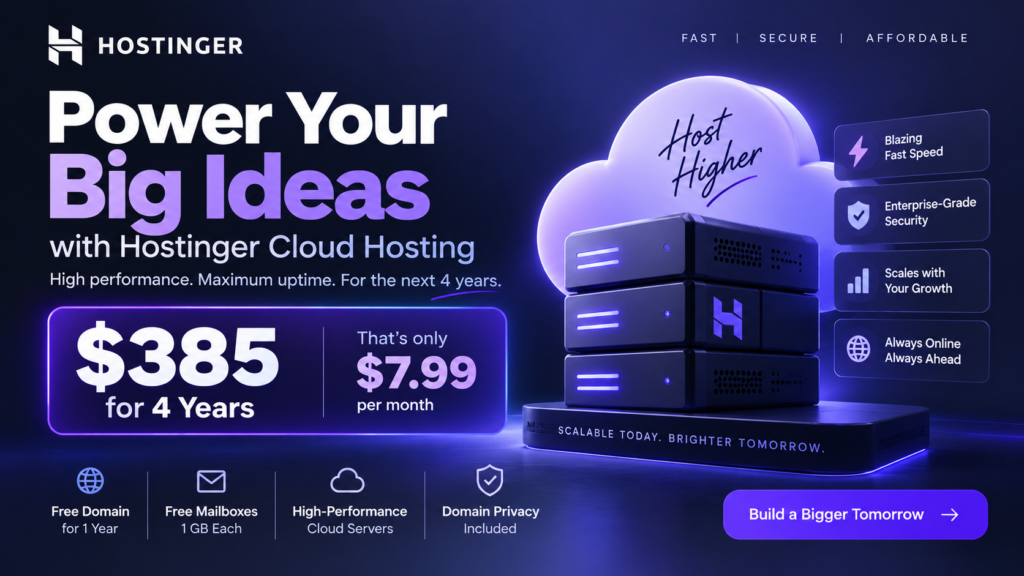
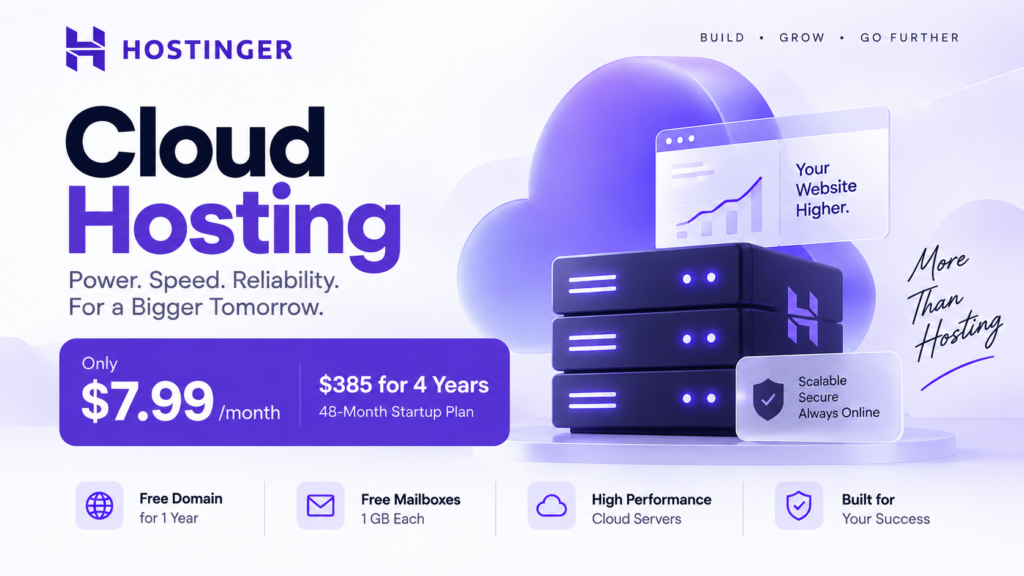
Hostinger’s $385 4-Year Cloud Deal: Is Hostinger Cloud Hosting Right for business owners replacing slow shared hosting?
If your website feels sluggish, unstable, or hard to scale, the real question is not whether cloud hosting sounds better. It is whether hostinger cloud hosting for slow websites gives your business a practical upgrade without overbuying capacity you do not need.
This guide looks at the value of the hostinger cloud hosting 4 year plan, what the long commitment means, and who should consider the hostinger cloud startup plan instead of staying on shared hosting.
Quick take on Hostinger Cloud Hosting
Hostinger cloud hosting can make sense for business owners who want a more capable environment than shared hosting, especially if slow page loads are starting to affect leads or sales. It is best viewed as a step up for sites that need more consistent resources, simpler scaling, and a cleaner path to growth.
That said, a 4-year commitment is a serious decision. The hostinger cloud hosting $385 style of deal may look attractive up front, but the best value depends on how long you expect to keep the site, how much traffic you handle, and whether your current performance issues are actually hosting-related.
Why business owners replace slow shared hosting
Shared hosting often works well at the beginning. It is simple, inexpensive, and easy to launch. But as a business site grows, the same environment can become a bottleneck. More pages, more plugins, more visitors, and more background processes can all increase load times.
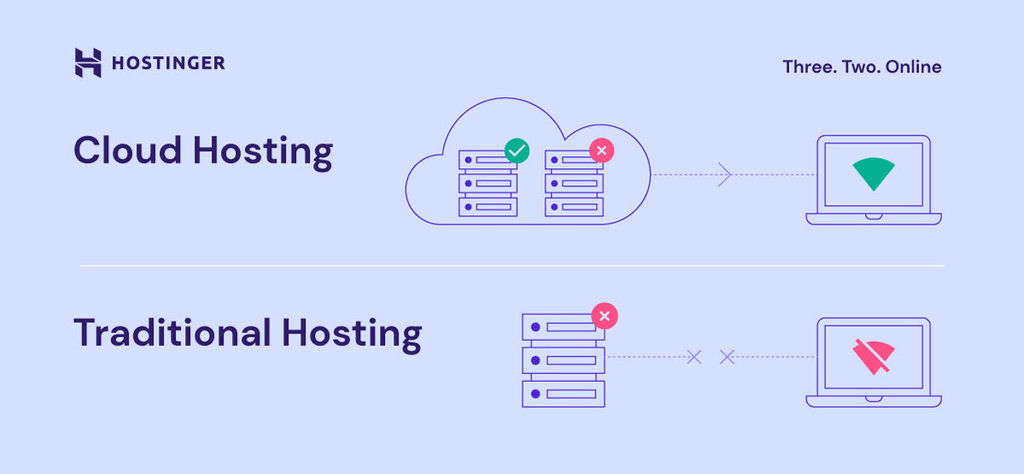
That is where hostinger cloud hosting for slow websites becomes relevant. Cloud hosting usually gives you a more isolated resource pool, which can improve consistency when traffic rises or when your site runs heavier WordPress features.
For business owners, the practical goal is not just speed. It is reliability. If your site slows down during campaigns, product launches, or busy hours, the hosting layer may be part of the problem.

If you are comparing options, it can help to review the hosting plan alongside your current traffic patterns rather than choosing only by headline price.
What the 4-year cloud deal really means
The phrase hostinger cloud hosting 48 month cloud hosting points to a long billing cycle, which can lower the monthly effective cost but also locks you in for longer. That is not automatically bad. For stable businesses, longer terms can make budgeting easier.
How the decision usually works
For some buyers, the hostinger cloud hosting $7.99 per month style of framing is helpful because it makes the plan feel affordable. Still, the real decision should be based on the full term, renewal expectations, and whether the included resources match your workload.
Key benefits business owners usually care about
More consistent speed
Cloud hosting is often chosen when shared hosting no longer delivers stable performance during busy periods.
Room to grow
It can suit businesses that expect more traffic, more pages, or more WordPress activity over time.
Recommended reading: At $7.99/Month: Is Hostinger Cloud Hosting Right for small ecommerce brands planning long-term growth?
Simpler decision-making
A bundled cloud plan can be easier to manage than piecing together separate infrastructure choices.
If you want to see how the plan is positioned for growth, compare cloud hosting plans before you commit to a long billing cycle.
Performance and technical considerations
Before moving from shared hosting, look at the parts of your site that actually create load. Large images, too many active plugins, weak caching, and an unoptimized theme can all slow WordPress down. Hosting helps, but it does not replace site optimization.
Check these before upgrading
- Current page speed on mobile and desktop
- Plugin count and plugin quality
- Image sizes and media handling
- Traffic spikes from campaigns or email sends
- Whether your current host throttles resources
Potential tradeoffs
- A longer plan reduces flexibility if your needs change
- Not every slow site needs cloud hosting first
- Renewal pricing may differ from introductory terms
- Migration effort still matters for business continuity
In other words, the best use case for hostinger cloud startup plan is a site that has already outgrown entry-level shared hosting and needs a cleaner operational base without jumping immediately to a more complex stack.
Who is Hostinger Cloud Hosting best for?
Small business owners
Good if your website is a lead generator, booking tool, or brochure site that needs steadier performance.
Growing WordPress sites
Useful when plugins, content volume, and visitor numbers are starting to stretch shared resources.
Agencies and freelancers
Helpful for client sites that need a more reliable environment with less day-to-day performance risk.
Pros and cons of the 4-year cloud deal
Pros
- Better fit than shared hosting for many growing business sites
- Long-term billing can simplify planning
- Potentially stronger value if you know the site will stay live
- Good step up for owners frustrated by slow pages
Cons
- A 4-year commitment reduces flexibility
- Not ideal if your traffic or business model may change quickly
- Speed gains still depend on site optimization
- The best value depends on renewal and workload details
How it compares with other common hosting paths
Best for
New sites, small blogs, and very light business pages.
Main strength
Lowest complexity and easy entry cost.
Main tradeoff
Can struggle when traffic, plugins, or business demands increase.

Best for
Owners replacing slow shared hosting who want a more stable middle ground.
Main strength
A stronger fit for growing WordPress and business websites.
Main tradeoff
A longer term may be less flexible than shorter plans.
Recommended reading: At $385 for 48 Months: Is Hostinger Cloud Hosting Right for freelancers managing several business websites?
Best for
Sites with technical teams, custom stacks, or heavier resource needs.
Main strength
More control and room for specialized configurations.
Main tradeoff
Usually requires more management and planning.
If your site has already outgrown shared hosting, explore cloud hosting options and compare them against your current setup before making a final call.

FAQ: Hostinger cloud hosting for slow websites
Is Hostinger cloud hosting worth it for a slow WordPress site?
It can be, especially if your current shared plan is the main bottleneck. But you should still check plugins, images, and caching first.
What does the 4-year plan mean for business owners?
It usually means lower long-term monthly framing, but also less flexibility. It works best for stable sites with predictable use.
Is the cloud startup plan enough for a small business?
For many smaller business sites, yes. The right choice depends on traffic, content volume, and how many tools your site runs.
Should I move immediately if my site is slow?
Not always. First confirm whether the slowdown comes from hosting or from the website itself. Then choose the upgrade that matches the real problem.
Is hostinger cloud hosting $385 a guaranteed best deal?
No single offer is always the best for every buyer. Compare the total term, renewal expectations, and your expected site lifespan.
Where should I start if I want to compare plans?
Start with your current traffic, your site’s resource use, and the features you actually need, then see current hosting options.
Final verdict: should business owners switch?
Hostinger cloud hosting is a sensible upgrade for business owners who have clearly outgrown shared hosting and want a more stable platform for a WordPress site, service business, or growing brand. It is especially relevant if slow performance is affecting conversions or making your site harder to manage.
The main limitation is the long commitment. If your business is still changing quickly, or if you are not sure how long the site will stay on the same stack, a shorter plan or a more flexible alternative may be safer.