4 Years for About $385: Is Hostinger Cloud Hosting Right for websites expecting seasonal traffic?
If your site gets busy during holidays, launches, enrollment periods, or campaign peaks, the question is not just price. It is whether hostinger cloud hosting for seasonal traffic gives you enough headroom, control, and simplicity to handle demand without making hosting management a second job.
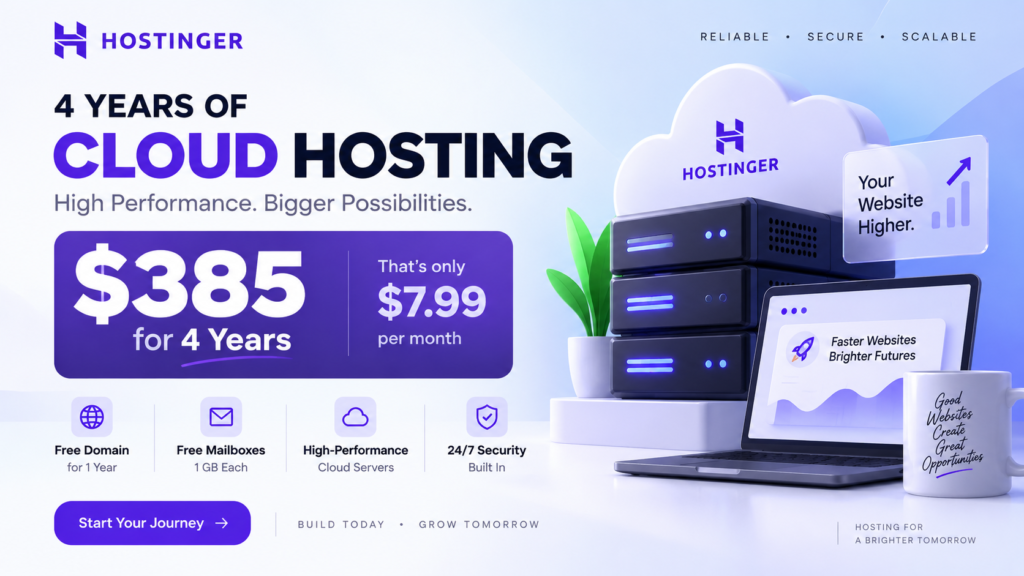
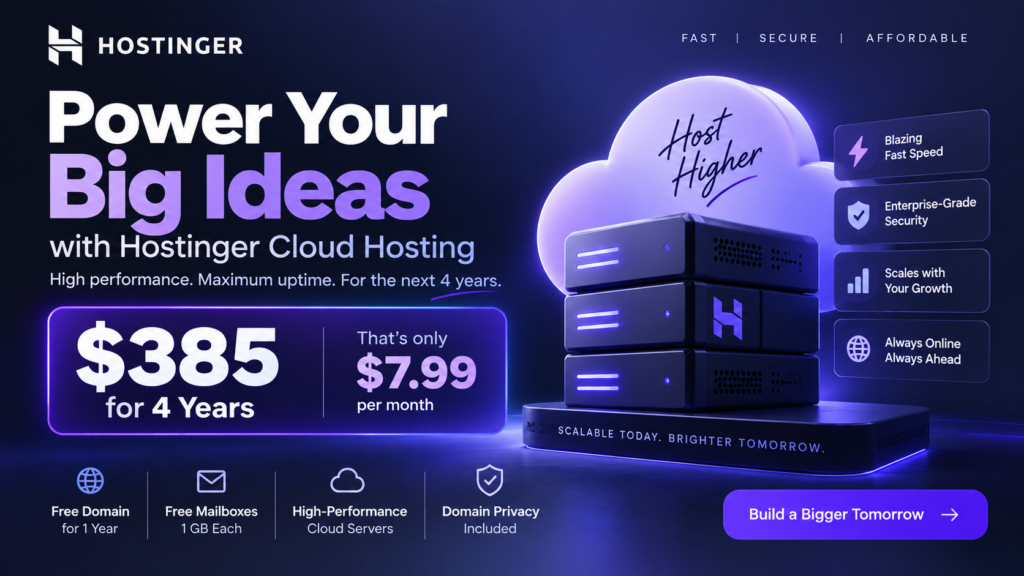
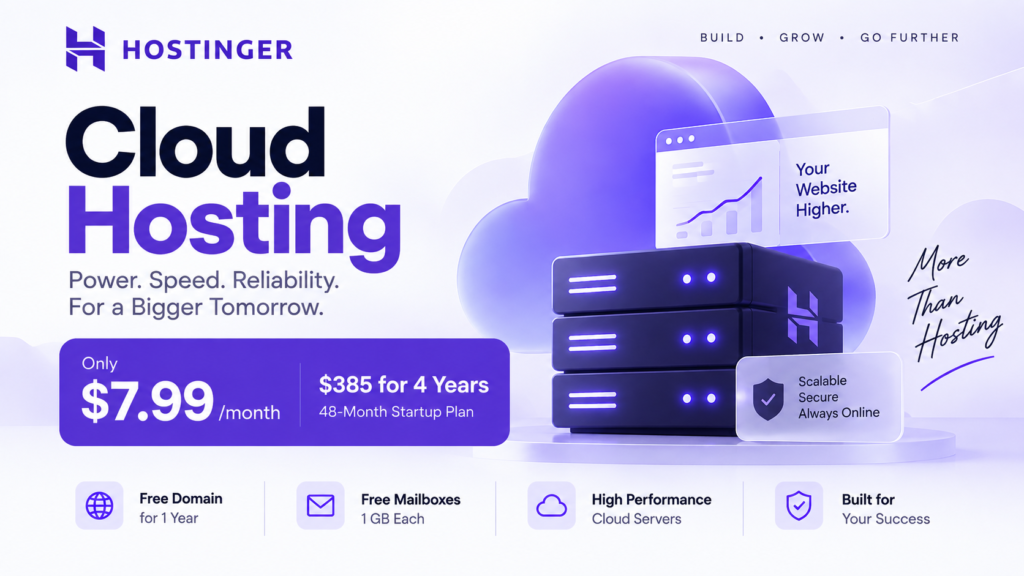
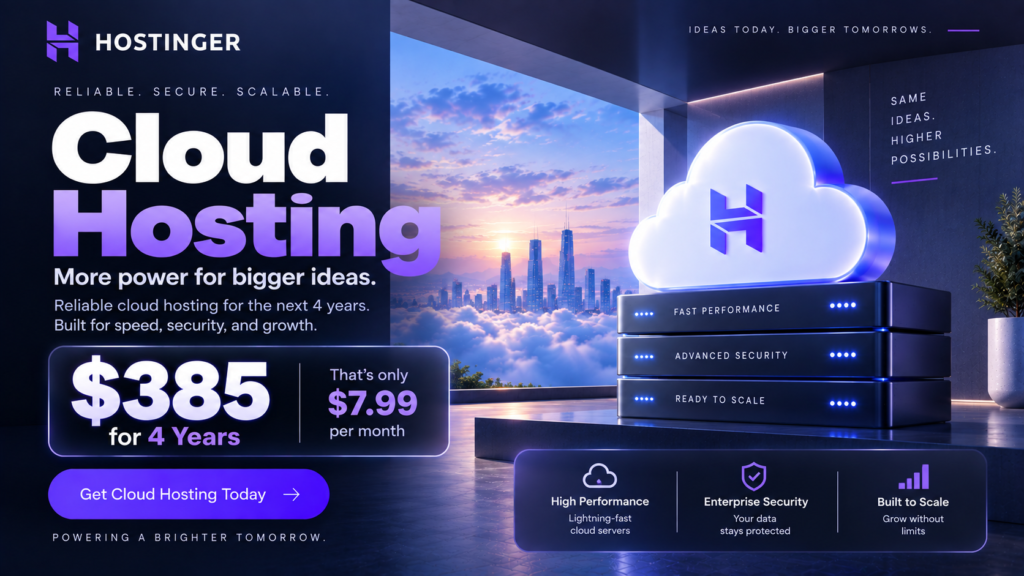
This guide looks at the long-term value of the hostinger cloud hosting 4 year plan, how the hostinger 48 month cloud hosting commitment changes the math, and whether the commonly discussed hostinger cloud hosting $385 total makes sense for your workload.
- Seasonal spikes
- Long-term budgeting
- WordPress-friendly setup
- Scalable resources
Sites that need more than shared hosting, but do not want the complexity of a fully managed server stack.
Predictable long-term pricing and a simpler path to handling growth than basic shared plans.
A long commitment only makes sense if your traffic pattern is stable enough to use the plan consistently.
Quick takeaway on Hostinger Cloud Hosting for seasonal traffic
For websites with predictable busy seasons, hostinger cloud hosting for seasonal traffic can be a practical middle ground. It is generally more capable than entry-level shared hosting and easier to manage than a self-managed VPS. That matters when you want a plan that can absorb bursts without forcing you to rebuild your setup every time demand rises.
Why seasonal traffic changes the hosting decision
Seasonal traffic is not the same as steady traffic. A retail store may see a holiday rush. A school, nonprofit, or membership site may peak during enrollment or event campaigns. A publisher may see traffic jump around launches or trending content. In these cases, the question is not only whether the site can stay online, but whether it can remain fast enough when visitors arrive at once.
That is where cloud hosting can be appealing. It is designed to feel more flexible than basic shared hosting, and that flexibility can matter when your audience is uneven across the year. If you are comparing long-term options, it helps to look at the Hostinger Cloud Hosting lineup with your busiest months in mind, not just your average month.
Seasonal traffic pattern
Normal growth
Peak demand
Cloud headroom
Cloud hosting is useful when performance needs to stay steady while traffic rises and falls.
The point of a diagram like this is simple: your hosting should absorb peaks without making the rest of the year unnecessarily expensive or complicated.
What the 4-year cloud plan really means
The hostinger cloud startup plan and longer-duration cloud offers are usually attractive because they reduce the monthly cost over time. The tradeoff is commitment. A long plan can be smart if you already know your site will stay active for years, but it is less forgiving if your business model changes or your project ends sooner than expected.
Why long-term pricing appeals to seasonal sites
Seasonal businesses often budget annually. A longer cloud plan can make hosting easier to forecast, especially when the site must be ready before a busy period starts.
Why commitment deserves caution
If your traffic pattern is still uncertain, a 48-month commitment may be more than you need. A shorter plan can be safer while you learn how your site behaves under load.
When you see a headline like hostinger cloud hosting $7.99 per month, always check whether that figure reflects a long billing cycle and whether it matches the features you actually need. Promotional pricing can be useful, but the real decision is whether the plan fits your traffic profile, not just the sticker price.
Features and practical benefits to look for
For seasonal traffic, the most important benefits are not flashy extras. They are stability, resource headroom, and ease of management. Here is a simple way to think about what matters most.
Resource headroom
More room for traffic spikes means fewer slowdowns during campaign periods or busy shopping windows.
WordPress convenience
If your site runs on WordPress, a managed cloud setup can reduce the time spent on server chores.
Recommended reading: $7.99/Month for 4 Years: Is Hostinger Cloud Hosting Right for B2B lead generation websites?
Budget predictability
A long plan can be easier to plan around when you already know the website will stay active for the long haul.
These benefits matter most when traffic spikes are part of a repeatable business cycle. If your traffic is tied to a specific season, the hosting should help you prepare for that season rather than force a last-minute migration.
Who is Hostinger Cloud Hosting best for?
Best for
- Small businesses with recurring traffic peaks
- WordPress sites that need more room than shared hosting
- Creators, schools, or stores with seasonal campaigns
- Owners who want simple management and long-term budgeting
Less ideal for
- Short-lived projects with uncertain lifespans
- Advanced users who want deep server-level control
- Sites that need enterprise-grade architecture
- Teams that may outgrow a fixed plan quickly
If you expect traffic spikes but still want a straightforward setup, this is the kind of plan that can make sense. If you need a highly customized environment, a more advanced cloud or VPS solution may be a better fit.
Pros and cons of choosing a long cloud commitment
Pros
- Lower long-term budgeting uncertainty
- Better fit for repeat seasonal demand
- More capable than entry-level shared hosting
- Less operational complexity than self-managed servers
Cons
- Long commitment reduces flexibility
- May be more than you need for very small sites
- Promotional pricing can require a longer term
- Not the right answer for highly specialized workloads
How it compares with other common hosting paths
Instead of thinking only in terms of price, compare the role each hosting type plays in your growth. The right choice depends on how often your site surges, how technical you are, and how much risk you want to accept.
Best for simple, low-traffic sites
Main strength: low entry cost and easy setup.
Main tradeoff: less room for seasonal spikes and limited performance headroom.

Best for recurring traffic peaks
Main strength: better balance of simplicity, scalability, and long-term planning.
Main tradeoff: a longer commitment can reduce flexibility if your needs change.
Best for technical teams
Main strength: more control for custom environments and demanding workloads.
Main tradeoff: usually requires more expertise and ongoing management.
For many site owners, the middle option is the most realistic. That is especially true when the business wants room to grow without taking on server administration as a full-time task.
What to check before you commit
Map your busiest months
Identify when traffic spikes happen and how long they last. Seasonal hosting only works well if the season is predictable enough to plan around.
Recommended reading: Can $7.99/Month Work for 4 Years? Hostinger Cloud Hosting for international business websites
Estimate how long the site will stay active
A hostinger cloud hosting 4 year plan can be sensible for an established site, but less so for a project still proving itself.
Match the plan to your technical comfort level
If you want a managed experience, cloud hosting can be easier than a VPS. If you need deep control, consider whether a more advanced option is worth the extra work.
A good hosting decision is the one that still feels right after the busy season ends, not just during the sale window.
FAQ: Hostinger Cloud Hosting for seasonal traffic
Is Hostinger Cloud Hosting good for seasonal traffic?
It can be a good fit when your traffic spikes are recurring and you want a simpler cloud setup than managing a server yourself.
Does a 4-year plan make sense for a seasonal business?
It can, if the business is established and the website will remain important throughout the full term. If not, shorter flexibility may be wiser.
What is the main benefit of the hostinger 48 month cloud hosting option?
The biggest benefit is long-term budgeting predictability, especially for sites that expect to stay active and grow over time.
Is hostinger cloud hosting $7.99 per month always the real price?
Promotional pricing usually depends on the billing term and offer conditions, so always confirm the current checkout details before you buy.
Should I choose cloud hosting or VPS?
Choose cloud hosting if you want a simpler managed experience. Choose VPS if you need more control and are comfortable managing the technical side.
Where can I compare current options?
You can compare cloud hosting plans and review the current offer details before deciding.
Final verdict
If your site expects seasonal traffic and you want a hosting plan that balances simplicity with more room to grow, hostinger cloud hosting for seasonal traffic is worth a serious look. The long-term pricing can be attractive, and the cloud format is better suited to recurring spikes than basic shared hosting.
The main limitation is commitment. A hostinger cloud hosting 4 year plan makes the most sense when your site has a stable future and your traffic pattern is predictable enough to justify the term. If your project is still evolving, or if you need deeper server control, a shorter plan or a more advanced alternative may be the smarter move.
In short: this is a strong option for established websites that want a practical balance of performance, convenience, and long-range budgeting.
Ready to compare current cloud hosting options?
Review the latest plan details, check the billing term that fits your budget, and decide whether a long cloud commitment matches your seasonal traffic goals.