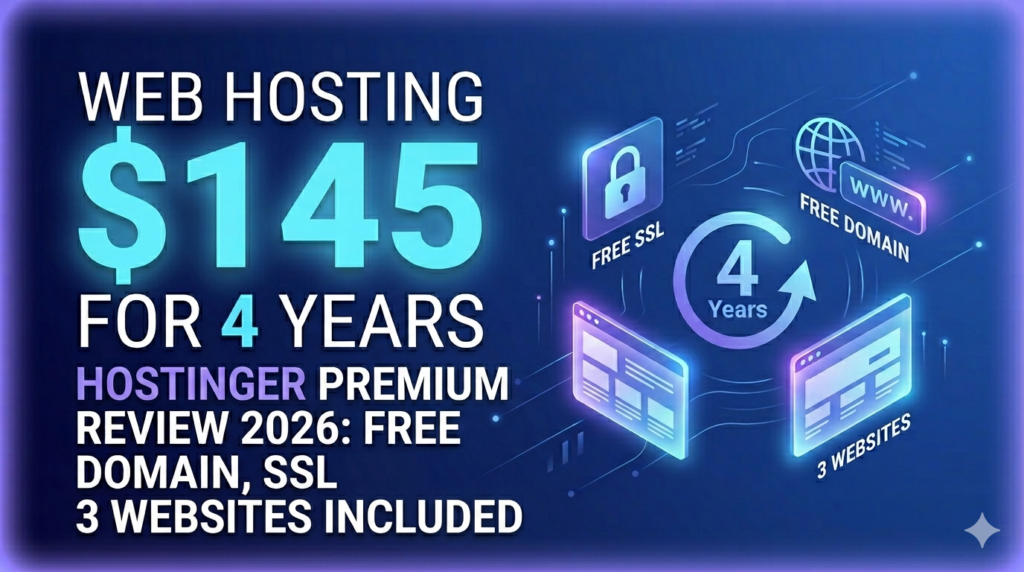
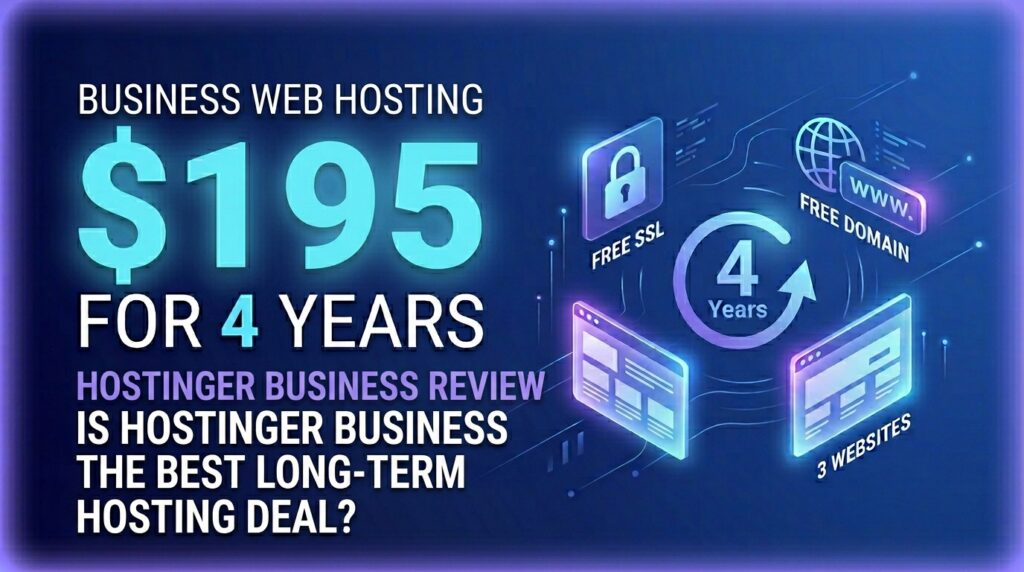
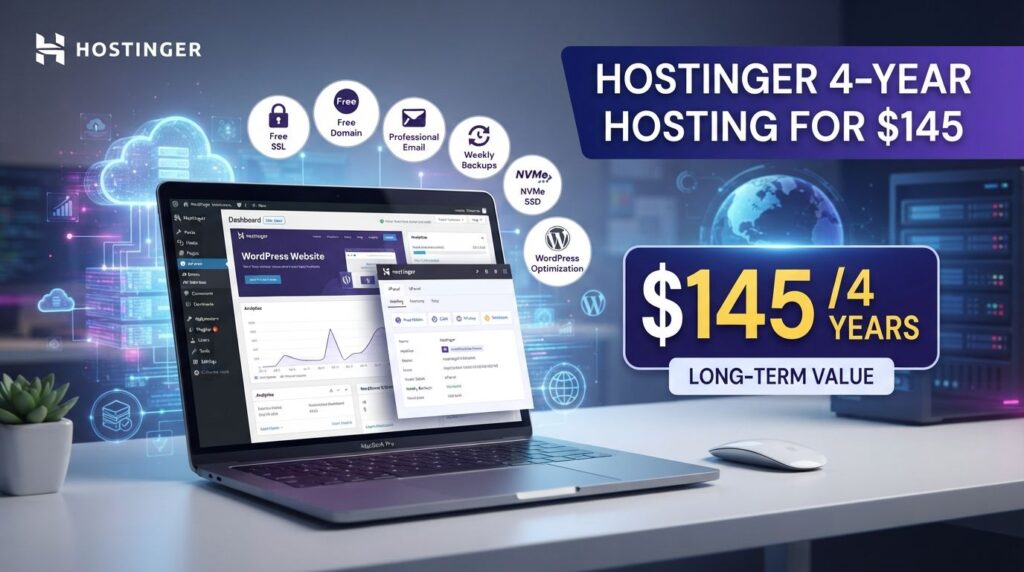
Hostinger 4-Year Hosting for Startups: Value, Trade-Offs and Use Cases
If you are building a new business website and want predictable hosting costs, hostinger is often part of the conversation. The real question is not just whether the plan is affordable, but whether a 4 year hosting commitment makes sense for your startup’s stage, cash flow, and growth path.
In this guide, we break down the practical value of Hostinger startup hosting, the trade-offs to consider, and the types of founders who may benefit most from a longer-term plan. You will also see where Hostinger fits into a startup website strategy without overpromising what any single plan can do.
Quick Answer: Is Hostinger 4-Year Hosting Worth It for Startups?
The short answer is that it can be a smart fit for a startup that wants low-friction website hosting and is comfortable committing to a longer billing cycle. It is especially relevant when the site is simple, the budget is planned in advance, and the team wants to avoid frequent renewal decisions.
- Best fit: lean startups, solo founders, agencies, and early-stage brands launching a new business website.
- Main value: lower long-term planning hassle and a clearer upfront hosting decision.
- Main trade-off: less flexibility if the business changes direction, needs more resources, or outgrows the plan.
Why Hostinger Appeals to Startup Teams
For startups, website hosting is rarely just a technical purchase. It affects launch speed, monthly overhead, support expectations, and how easily the business can adapt later. That is why web hosting for startups should be judged on both value and operational simplicity.
Hostinger is often considered because it combines a beginner-friendly setup with a broad range of entry-level hosting options. For founders who want to get a site live without building a complex infrastructure stack, that can be useful. It is also why many teams compare Hostinger cloud hosting against more traditional shared hosting before deciding.
Startup hosting decision flow
Choose a plan that gets the website online quickly with minimal setup friction.
Make sure the plan can handle your expected pages, forms, and early visitors.
As the business grows, reassess whether the same hosting tier still fits your workload.
What the 4-Year Hosting Commitment Changes
A long billing cycle changes the decision from “What is my monthly hosting cost?” to “How confident am I that this plan fits my startup for the next several years?” That is a meaningful shift for founders who want predictable budgeting, but it is not automatically the best choice for every business.
Budget planning
A longer commitment can make the website expense easier to plan around, especially for founders trying to keep recurring costs simple.
Recommended reading: $145 for 4 Years of Website Hosting: A Practical Guide for Startups
Fewer renewal decisions
Instead of revisiting hosting every year, you can focus on product, content, and customer acquisition.
Less flexibility
If your startup pivots, merges, or outgrows the plan, a long prepaid period can feel restrictive.
If you want to compare longer-term options before committing, you can review the Hostinger plan and decide whether the term length matches your roadmap.
How Startup Websites Typically Use a Hostinger Plan

A startup website usually starts small: a homepage, about page, service or product page, contact form, and maybe a blog or landing pages. That makes the initial hosting decision more about reliability and room to grow than about complex infrastructure.
Value, Trade-Offs and Use Cases
Where the value shows up
- Simple setup for a new business website.
- Useful for founders who want one hosting decision for a longer period.
- Good fit for early marketing sites, service businesses, and portfolio-style launches.
- Appealing when you want hosting and site management to stay straightforward.
Where the trade-offs matter
- Longer commitments reduce flexibility if the startup changes quickly.
- Resource needs can grow as traffic, media, and functionality increase.
- Advanced workloads may eventually require a stronger hosting tier.
- Long-term value depends on whether the plan still fits after launch.
For many founders, the smartest approach is to treat hosting as a business tool, not a permanent identity choice. If the site is still evolving, it may be worth discussing the setup with Web Designing Experts or a developer who can help you match the plan to the actual website build, not just the launch day budget.
Who Is Hostinger Startup Hosting Best For?
Best for simple launches
Founders who need a clean, professional website, a contact form, and a reliable starting point without overcomplicating hosting.
Best for client projects
Teams managing a startup hosting setup for a client can use the plan to get a site live quickly and keep costs organized.
Best for early scale
Businesses with steady but not extreme traffic can often start here, then reassess as content, visitors, and features expand.
Pros and Cons of a 4-Year Hostinger Plan
Pros
- Clear long-term hosting decision for startup planning.
- Less time spent comparing plans every renewal cycle.
- Good starting point for a simple business website.
- Works well when the team values convenience and predictability.
Cons
- Less flexibility if your startup pivots or grows quickly.
- Not ideal if you want to test hosting short term first.
- May be outgrown by more demanding websites later.
- Longer commitment means you should be confident in the fit.
How It Compares With Other Startup Hosting Paths
Lowest complexity
Best for very early sites that need affordability and simplicity. The trade-off is that resources are shared, so growth headroom can be limited.
Balanced startup value
A practical middle ground for founders who want predictable hosting and a straightforward setup for a new business website.
Recommended reading: Hostinger 4-Year Hosting for Small Businesses: Value, Trade-Offs and Use Cases
More control and scale
Better for heavier traffic, custom configurations, or more demanding applications. It can be more complex and may cost more to manage.
Recommended reading: If you are still comparing options, compare Hostinger cloud hosting plans before deciding on a longer commitment.
Frequently Asked Questions
Is a 4-year hosting plan too long for a startup?
Not necessarily. It depends on how stable your business model is and how confident you are that the hosting plan will still fit your website over time.
Is Hostinger good for a new business website?
It can be a practical choice for a new business website when you want an easy setup, a clear starting point, and a plan that is simple to manage.
What type of startup should avoid a long commitment?
Startups with uncertain product direction, rapid scaling plans, or highly variable traffic may prefer more flexible hosting options at first.
Does startup hosting need to be advanced?
No. Many startups only need dependable website hosting, basic performance, and enough room to grow while they validate their offer.
Where can I review the current Hostinger offer?
You can see current Hostinger hosting options and compare them against your startup’s needs.
Is the Hostinger $145 deal always the same?
Promotions can change, so it is best to check the live offer before deciding. Treat any deal as time-sensitive unless the provider states otherwise.
Final Verdict: Should Startups Choose Hostinger 4-Year Hosting?
If your startup wants a practical, low-maintenance hosting setup for a straightforward website, Hostinger can be a sensible option. The main strengths are simplicity, long-term planning ease, and a fit for early-stage business sites. The biggest limitation is flexibility: if your startup evolves quickly, you may want a more scalable or adjustable hosting path.
For founders who are comfortable with a longer commitment and want to keep website hosting decisions streamlined, this can be a strong starting point. For teams expecting rapid growth or more complex technical needs, it is worth comparing alternatives before locking in a long term.