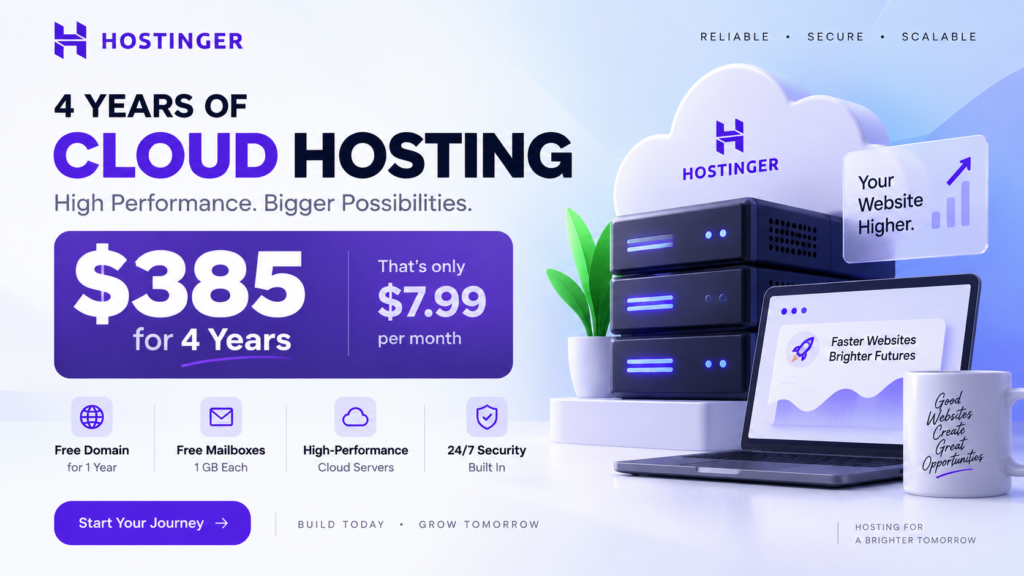
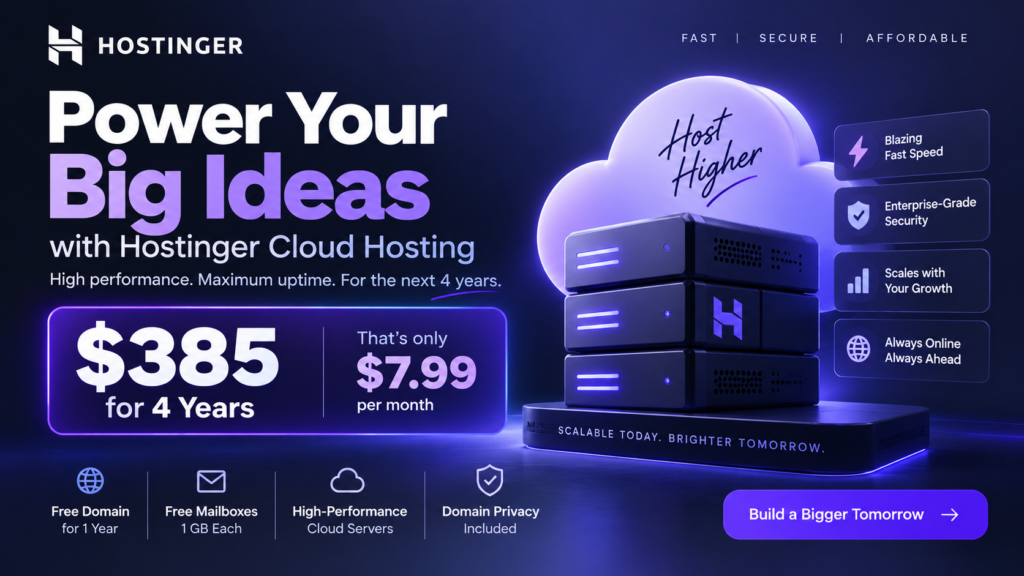
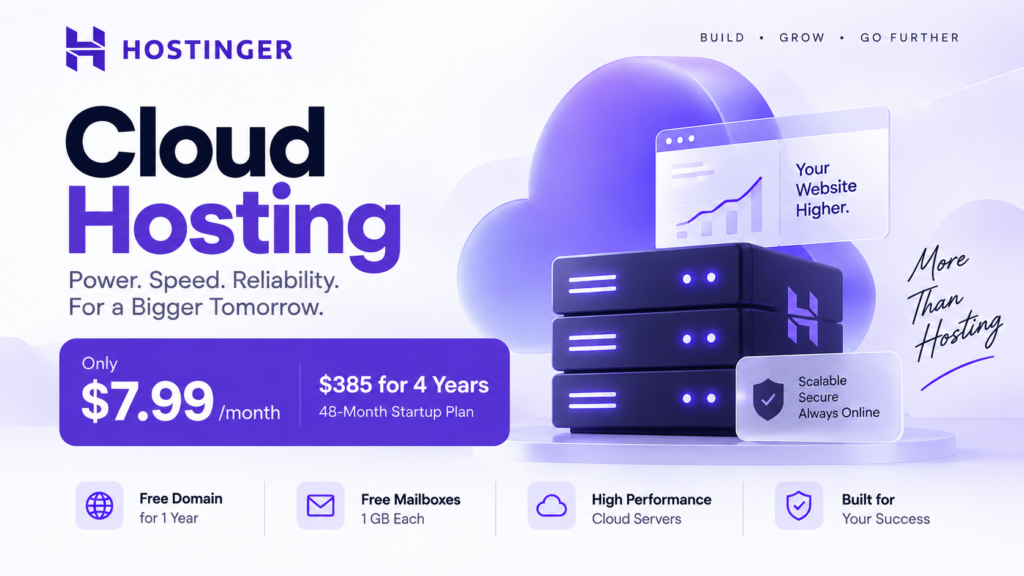
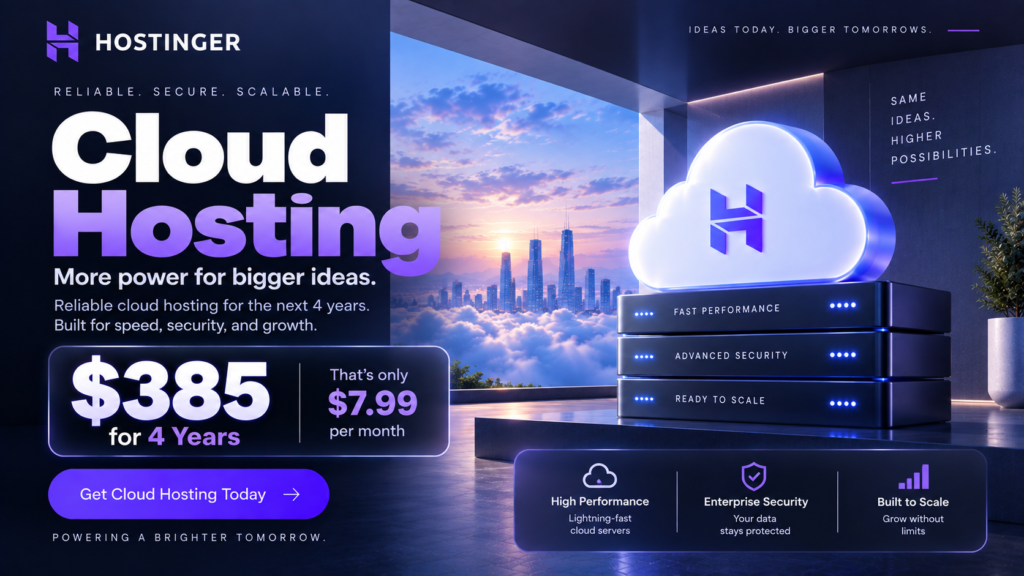
The $7.99/Month 48-Month Deal: Hostinger Cloud Hosting for business blogs publishing content frequently
If your blog publishes often, the real question is not just price. It is whether your hosting can stay fast, stable, and manageable as publishing volume grows. That is why many site owners compare Hostinger cloud hosting for business blogs against cheaper shared plans and more complex VPS options.
Hostinger cloud hosting for business blogs makes the most sense for publishers who want a more scalable environment than basic shared hosting, without jumping straight into a hands-on VPS workflow. The hostinger cloud hosting $7.99 per month angle can be attractive for long-term planning, but the value depends on the plan details, renewal terms, and whether your blog actually needs the extra headroom.
Why frequent publishing changes the hosting decision
Business blogs that publish often tend to create a different kind of load. New articles may bring bursts of internal linking, image uploads, editorial previews, and traffic spikes from email or social distribution. A host that feels fine for a static brochure site can start to feel slow when the content calendar gets busy.
That is the main reason people look at hostinger cloud hosting 4 year plan discussions and other longer-term offers. The appeal is not only the monthly number. It is the idea of predictable hosting for a content operation that expects to keep growing.
Long-term planning for content teams
For a business blog, the most useful hosting is usually the kind that stays out of the way. If your team publishes regularly, you need a setup that can handle editorial workflow, cached pages, and media assets without constant tuning.
That is where the hostinger cloud startup plan style of positioning can help. It suggests a starting point that is easier to manage than a self-managed server, while still aiming above entry-level shared hosting.
- How much CPU, RAM, and storage are included in the exact plan you are viewing.
- Whether backups, staging, and email are included or sold separately.
- What the renewal price becomes after the promotional term ends.
- Whether the plan is enough for your traffic pattern and media-heavy posts.
Where the value is strongest
Predictable budgeting
Longer terms can make budgeting simpler for content businesses that want to avoid frequent plan changes. That can matter if your blog supports lead generation, newsletters, or service pages.
Better fit for growth
Cloud-style hosting is often a better fit than basic shared hosting when your site has multiple contributors, image-heavy articles, or seasonal traffic swings.
Lower complexity than VPS
If you want more structure than a shared plan but do not want to manage a server manually, a managed cloud option can be the middle ground.
If you want to review the current offer structure directly, you can review the hosting plan before deciding whether the long-term commitment makes sense.
Recommended reading: At $7.99/Month: Is Hostinger Cloud Hosting Right for small ecommerce brands planning long-term growth?

Performance and technical considerations
For frequent publishing, the most important hosting questions are practical rather than flashy. Can pages load consistently? Can editors work without delays? Can images, cached pages, and database requests stay responsive when multiple articles are published in a short window?
Because plan details can change, avoid assuming every cloud package includes the same resources. Instead, compare the exact allocation, support level, and backup policy. If your blog uses many plugins, large featured images, or heavy page builders, those details matter more than a headline price.

A useful rule: the more often you publish, the more you should value stability, caching, and room to grow over the lowest possible starting cost.
Pros
- Good fit for blogs that publish frequently and want more breathing room than shared hosting.
- Long-term pricing can help simplify budgeting when the plan details fit your needs.
- Managed cloud positioning is easier for small teams than a fully self-managed server.
- Useful for content sites that expect growth, seasonal traffic, or multiple contributors.
Cons
- The exact included resources and renewal pricing need careful review before you commit.
- A 48-month commitment may be too long if your needs are still changing.
- Some blogs may not need cloud hosting yet if traffic is low and publishing is light.
- It may be less flexible than a pay-as-you-grow setup for some teams.
How it compares with other hosting choices
Best for very small blogs
Strength: low entry cost and simple setup.
Tradeoff: less headroom when publishing volume or traffic rises.
Best for growing business blogs
Strength: a stronger balance of simplicity and performance for frequent publishing.
Tradeoff: you should confirm the exact resources and long-term renewal cost.
Best for technical teams
Strength: more control and customization.
Tradeoff: more management work and a steeper learning curve.
Recommended reading: Is $385 for 4 Years Worth It? Hostinger Cloud Hosting for multi-author WordPress websites

If you want to compare the current offer against other options, explore cloud hosting options and check whether the long-term package matches your publishing roadmap.
Who is it best for?
Best for
- Business blogs publishing multiple times per week.
- Content teams that want a managed hosting experience.
- Sites that expect gradual growth in traffic and content volume.
May need a different option
- Very small blogs with minimal traffic.
- Teams that prefer short commitments while testing a new site.
- Advanced users who want full server-level control.
Frequently asked questions
Is Hostinger cloud hosting good for business blogs?
It can be a strong fit when your blog publishes often and needs a more scalable setup than basic shared hosting. The best choice depends on the exact plan resources and your traffic pattern.
What does the $7.99 per month offer mean?
It usually refers to a promotional monthly rate tied to a longer commitment. Always confirm the billing term, renewal price, and what is included before purchasing.
Is a 48-month plan worth it?
It can be worth considering if you are confident in the platform and want long-term budgeting stability. If your needs may change soon, a shorter term may be safer.
How does it compare with shared hosting?
Cloud hosting usually offers more breathing room for frequent publishing, but shared hosting can still be enough for smaller sites with lighter demands.
What should I check before buying?
Review the included resources, backup options, support level, renewal terms, and whether the plan suits your current content workflow.
Where can I review the current offer?
You can see current hosting options and compare the long-term value against your publishing goals.
Final verdict
For business blogs that publish content frequently, hostinger cloud hosting for business blogs is worth a close look when you want a balance of simplicity, room to grow, and long-term budgeting potential. The hostinger 48 month cloud hosting angle may appeal to teams that are comfortable committing for the long haul, especially if the plan resources and renewal terms align with the site’s growth path.
The main limitation is straightforward: a long commitment only makes sense when you are confident about the fit. If your traffic is still uncertain or your publishing strategy is changing quickly, a shorter term or a more flexible option may be smarter. For the right blog, though, the deal can be a practical way to secure hosting that supports regular publishing without overcomplicating the workflow.
Ready to compare the current cloud hosting offer?
Review the plan details, check the long-term value, and decide whether this setup fits your publishing schedule and growth plans.